ERP development company
We build ERP systems that businesses actually run on — one record across sales, purchases, payroll, accounting and inventory, delivered end to end and handed over as capability you can operate.
In plain terms: one system that tracks your sales, stock, payroll and money — so you always know what you have, what you owe, and what you're owed.
What we build
ERP is one of our deepest areas. We design and build multi-tenant SaaS ERP products, retail and point-of-sale ERP, and full hospital ERP covering clinical, operational and financial workflows. Systems can be delivered as a configured product, extended from an existing base, or built to processes specific to how your business already works.
- Sales, purchases and order management
- Payroll and human resources
- Accounting, receivables and payables
- Inventory, stock and warehouse control
- Reporting, analytics and business intelligence
- Multiple business units under one account
- Role-based access and audit trails
- Integration with existing systems and gateways
How an ERP project runs
ERP projects fail when scope is vague, so we start by mapping the workflow as it actually operates rather than as the org chart describes it. A Discovery Sprint of one to two weeks produces a diagnosis, a scoped solution concept, a rough-order cost and an implementation plan before anyone writes production code.
- Diagnose — map the workflow, isolate constraints and success metrics
- Design — architecture, module scope and integration map
- Build — develop, integrate and prepare for production
- Deploy — release, test, train teams, move into live use
- Scale — refine through data and expand across modules
AI inside the ERP
Applied AI is not a separate product line for us. In BooksIQ it sits inside the accounting workflows themselves, and the same approach carries into custom builds: automation of repetitive data entry, anomaly detection across ledgers, natural-language reporting and document extraction, all integrated into the system rather than bolted alongside it.
Platforms we have delivered
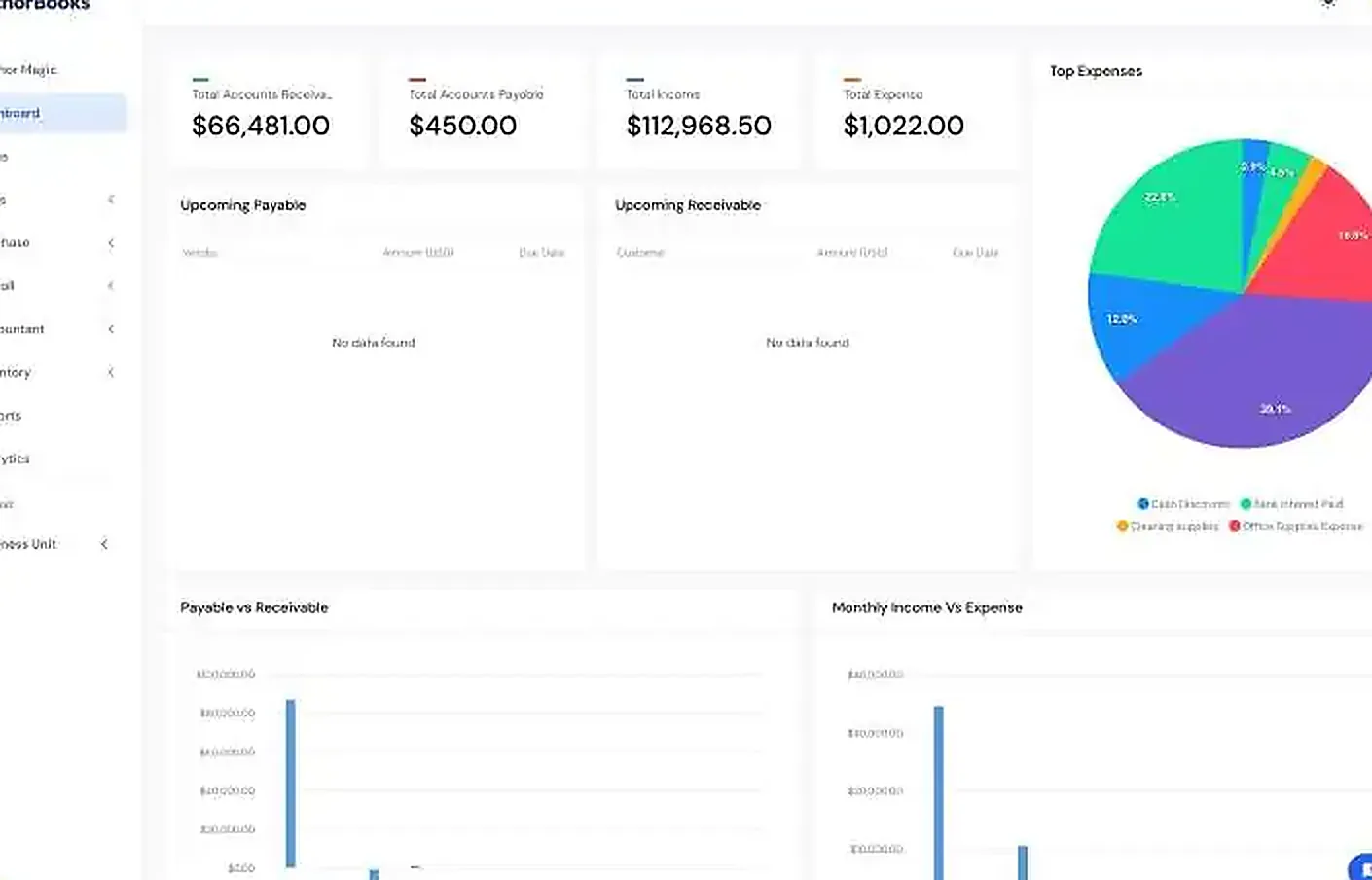
BooksIQ
SaaS / AI / ERPAn accounting-grade ERP built alongside a chartered accountancy firm. Sales, purchases, payroll, accounting, inventory and reporting, all reading from one set of books.
View project →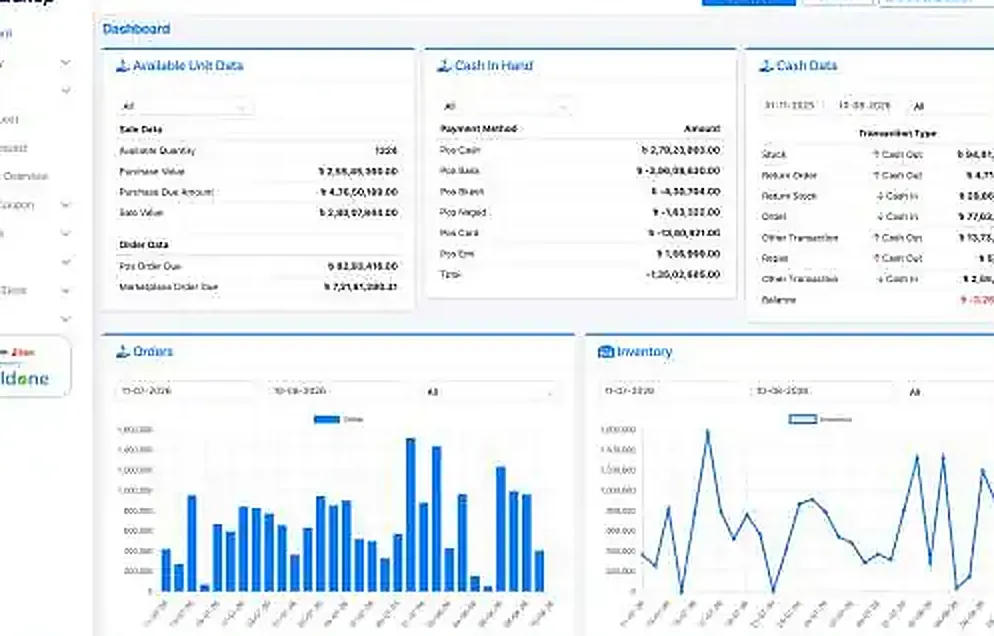
Supershop (POS)
ERP / RetailA point-of-sale system covering inventory, offers, financial management and reports, including seamless online order processing.
View project →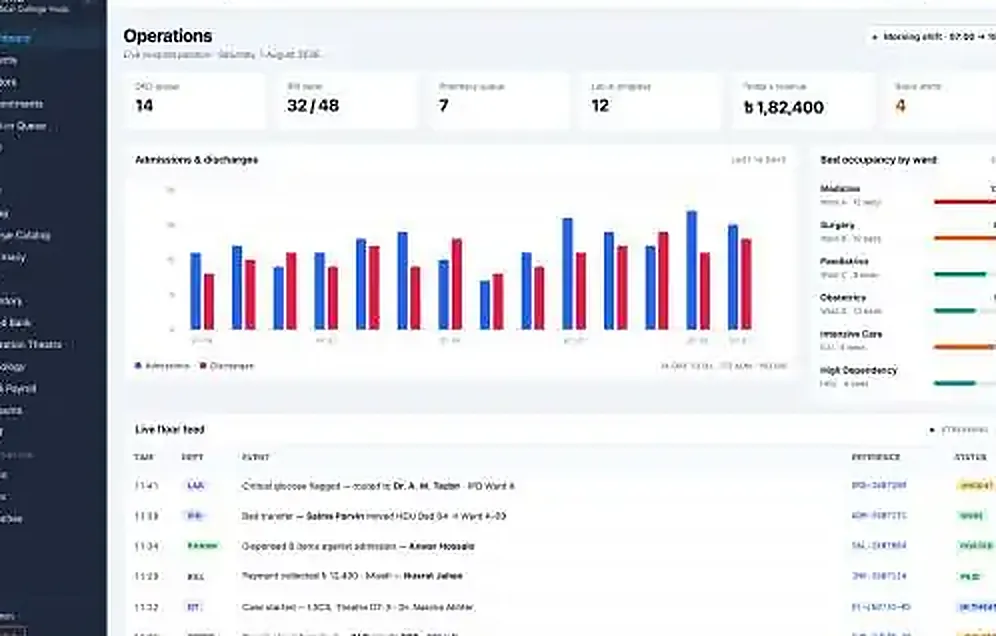
Shafa HMS
Healthcare / SaaS / ERPDigitizes hospital operations and clinical documentation in interoperable formats, built on FHIR and HL7 and ready for national health data frameworks.
View project →Questions about erp development
How long does a custom ERP take to build?
Most ERP builds run from six to twelve or more weeks depending on module scope, integration count and data migration complexity. A Discovery Sprint of one to two weeks comes first and produces a firm implementation plan and rough-order cost, so you are not committing to a full build on an estimate alone.
Can you integrate ERP with our existing systems?
Yes. We integrate over REST, GraphQL, gRPC, SOAP and webhooks, and regularly connect ERP systems to payment gateways, marketplaces, e-commerce storefronts, banking interfaces and reporting tools. Where a legacy system has no API, we work through database-level or file-based integration.
Do you build multi-tenant SaaS ERP or single-tenant?
Both. BooksIQ is a multi-tenant SaaS ERP serving many businesses from one deployment. For clients who need data isolation, regulatory separation or heavy customisation, we build single-tenant systems deployed to infrastructure you control.
What technology do you build ERP systems on?
Typically Node.js, NestJS, Django, FastAPI, Laravel or .NET on the backend with PostgreSQL or MongoDB, React or Next.js on the frontend, deployed with Docker and Kubernetes on AWS, GCP or Azure. The stack is chosen to fit your team and hosting constraints, not our preference.
Let's talk about what you're building
Tell us the problem in your own words. We'll tell you honestly whether we're the right people for it, and what a sensible first step looks like.